
The Psychology of Loyalty: 3 Mechanisms That Increase the Effectiveness of Your Program

Executive Summary:
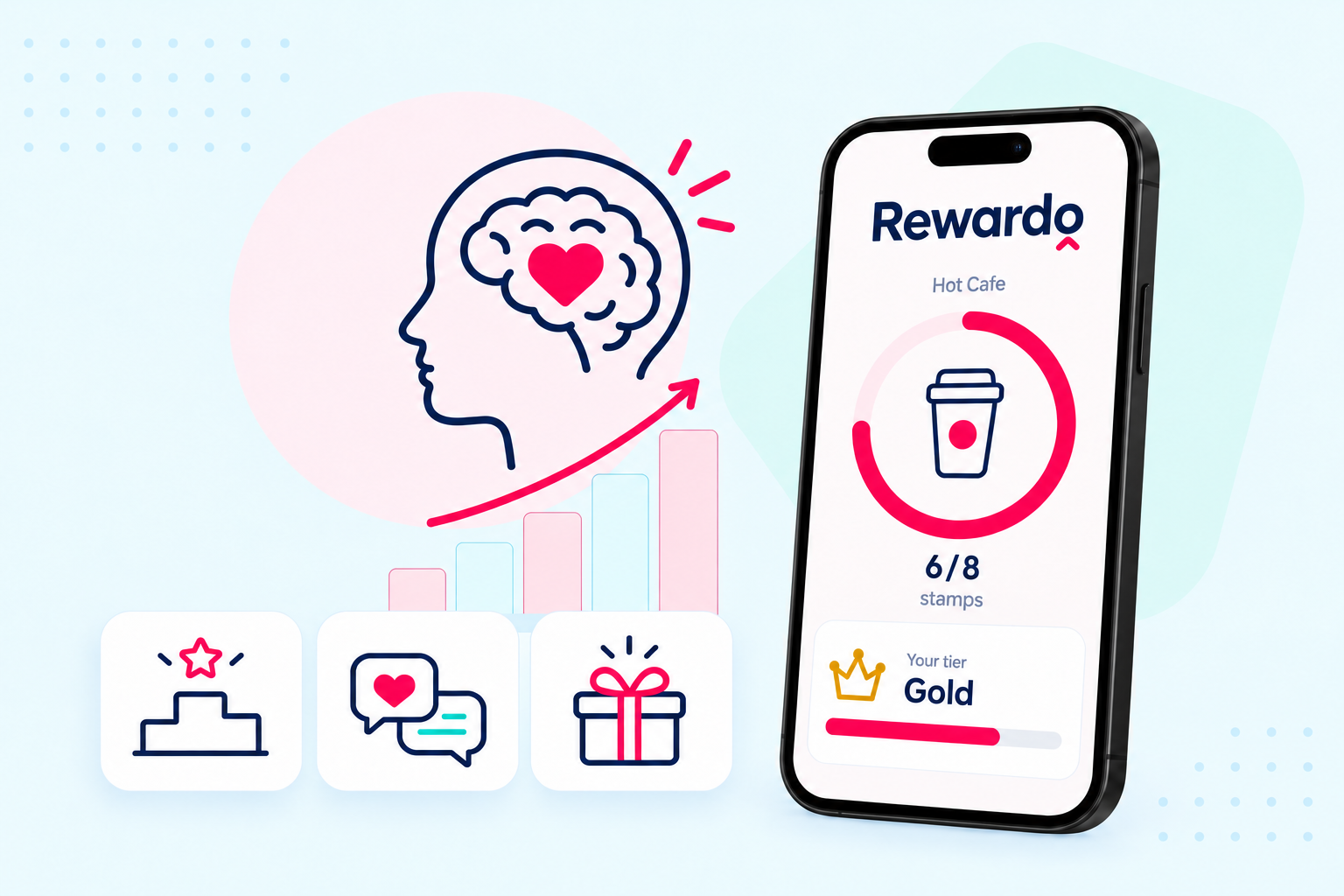
Customer loyalty is driven not only by rewards but also by psychology. This article explores powerful behavioral mechanisms – such as the goal-gradient effect, endowed progress, and personalized communication – that can significantly increase customer engagement, motivation, and the effectiveness of loyalty programs.
The Psychology of Loyalty: 3 Mechanisms That Increase the Effectiveness of Your Program
Why do some customers happily return to a brand while others quickly drop out of a loyalty program? The answer lies in psychology. The goal-gradient effect, the “endowed progress” boost, and adjusting the tone of communication to the customer’s stage are mechanisms that can radically improve program effectiveness. Discover how you can apply them in your business.
Psychology – the key to loyalty?
Loyalty programs don’t work just because they offer rewards. Their effectiveness is largely based on psychological mechanisms that influence customer behavior. Loyalty is not only about repeat purchases but also about the motivation that makes a customer choose one brand over another. Understanding this motivation allows you to design programs that engage participants and directly translate into stronger loyalty and better business results.
The Goal-Gradient Effect
One of the best-documented psychological mechanisms is the so-called goal-gradient effect, first described by Hull in 1932 [1]. The phenomenon applies perfectly to loyalty programs – customers speed up their purchases as they feel closer to a reward. The shorter the distance to the goal, the stronger the motivation to act.
In practice: loyalty programs should clearly communicate how close customers are to their reward.
Example: an app notification such as “Only 2 visits left until your free coffee!” works as an extra nudge, shortening the time between visits and boosting sales.
Loyalty Tiers and Motivation
A similar effect is especially visible in multi-tier programs. Customers who are close to reaching the next membership level significantly increase their purchase activity – they shorten the time between visits and choose the brand more often to advance and unlock new benefits. Research shows that simply being aware of how close they are to the goal acts as a motivating factor, effectively strengthening loyalty and program attachment [2].
That’s why clear communication about progress and rewards matters so much. Brands should actively inform customers about their status – e.g., through app notifications (“Only 2 visits left to reach Gold status!”) or reminders at checkout.
Studies suggest that the most effective loyalty programs include 3–4 tiers.
Learn why in the article: Discounts, Points or Premium Rewards? What Really Works in Loyalty Programs?
Emotions vs. Numbers – Matching Communication
Program effectiveness depends not only on rewards but also on the way you communicate. Research shows that a customer’s tier and distance to the next goal shape their thinking style – and thus their response to marketing messages [2].
- Lower tiers + close to a reward – emotional thinking. Emotional messages work best here, e.g.:
“Enjoy your reward soon!”
“Feel special.” - Higher tiers or far from the next goal – rational, strategic thinking. Here, rational messages resonate better, highlighting numbers and long-term benefits, e.g.:
“Earn 100 extra points.”
“Get 20% faster access to Gold status.”
Properly adjusting communication tone to the customer’s stage increases program effectiveness and reinforces motivation.
Start with an Advantage – The Endowed Progress Effect
Another powerful psychological mechanism is the endowed progress effect. Customers are more likely to engage in a program if they feel they’ve already made progress toward a reward from the very beginning.
Nunes & Drèze (2006) [3] demonstrated this with a punch card experiment: a 10-punch card with 2 free punches at the start was completed more often than an 8-punch empty card – even though both required 8 purchases to get the reward. The simple feeling of “already being on the way” made the goal seem closer and more attainable.
In practice: give customers an early boost – e.g., a few welcome points in the app or a partially pre-stamped punch card. These small gestures significantly increase the chance that a customer will get engaged quickly and remain active longer.
Summary – Psychological Tricks in Practice
Psychology gives marketers practical tools to design more effective loyalty programs. The goal-gradient effect, tier advancement, communication matching, and endowed progress are simple strategies that can easily be built into loyalty apps.
Checklist for businesses:
- Show customers their progress and how close they are to the next reward.
- Design 3-4 membership tiers to reinforce a sense of progress.
- Adjust your communication tone to the customer’s stage (emotional vs. rational).
- Give customers an advantage at the start – e.g., welcome points.
By using these mechanisms, a loyalty program becomes not just a reward system but a strategy for building lasting engagement.
Want to use psychological mechanisms to power up your loyalty program? Discover how Rewardo helps businesses designing loyalty apps that truly boost customer engagement.
References:
[1] Hull, C. L. (1932). The goal-gradient hypothesis and maze learning. Psychological Review, 39(1), 25–43.
[2] J. Zhang and Y. Liu-Thompkins (2024). Personalized email marketing in loyalty programs: The role of multidimensional construal levels. Journal of the Academy of Marketing Science, 52(1), 196–216.
[3] Nunes, J. C., & Drèze, X. (2006). The Endowed Progress Effect: How Artificial Advancement Increases Effort. Journal of Consumer Research, 32(4), 504–512.
Table of Contents
Read more articles
7 Loyalty Program Examples for Small Businesses
Home – Summary: Explore seven simple loyalty program examples for cafes, salons and local shops. Choose a reward and rules that give customers a clear reason to come back. A loyalty program does not need a complex app or several reward levels. For a small business, a…
Vouchers as Rewards for Loyal Customers: How to Use Them
Home – Summary: Learn how to use vouchers to reward returning customers. Explore three practical ideas, set clear terms and track whether customers redeem them and come back. A voucher can reward a repeat purchase, introduce a customer to a new service or bring people…

How to Start a Restaurant Loyalty Program
Home – Summary: Plan a restaurant loyalty program with clear rules and a reward that fits your margins. Learn how to explain it at checkout and measure whether guests return. A returning guest already knows your menu and service. A loyalty program can give them…