
Vouchers as Rewards for Loyal Customers: How to Use Them


Summary:
Learn how to use vouchers to reward returning customers. Explore three practical ideas, set clear terms and track whether customers redeem them and come back.
Vouchers as Rewards for Loyal Customers: How to Use Them
A voucher can reward a repeat purchase, introduce a customer to a new service or bring people in on a quieter day. It works best when customers can quickly see what they get and how to use it.
This article looks at vouchers as a tool for businesses. For a basic definition, visit the Rewardo glossary.
Choose one reason to offer a voucher
Before you set a value or benefit, decide what you want the voucher to do. You might reward a customer after a set number of visits, encourage them to try something new or invite them back on a specific date. Give each voucher a clear purpose.
Three voucher ideas for returning customers
1. A voucher after reaching a target
Customers collect points or stamps and receive a voucher when they reach a set target. It could apply to their whole purchase or to a specific service or product. Choose a benefit with a known cost that your team can handle.
2. A voucher for something new
When you introduce a product or service, a voucher can help regular customers try it. Say exactly what the voucher covers and whether customers can combine it with other offers. Make sure staff know how to recognise it at checkout.
3. A voucher for a quieter time
Offer a benefit on selected days or during specific hours. This can help bring in customers when your team or venue has room for more business. Show the valid dates clearly and keep booking or redemption simple.
Set the terms before you announce the voucher
- What the voucher covers.
- Who can receive it and how.
- Where and how customers can redeem it.
- Whether it expires or has other limits.
- Whether customers can combine it with another offer.
Share the details on the voucher, in your app or in the message that sends it. Keep the terms short and visible. Clear information makes it easier for customers and staff at checkout.
Check whether the voucher did its job
Track how many vouchers you issued, how many customers redeemed and what the rewards cost. Then check whether those customers returned later. A redemption on its own does not show whether the voucher led to an extra visit, so compare results over time with a similar period.
If customers are not using the vouchers, review the terms, expiry date and how visible the offer is. The benefit may be hard to understand or may not suit your customers. Change one detail at a time so you can see what helps.
Digital rewards can work alongside a points or stamp program. Learn about Rewardo’s loyalty app for businesses and loyalty management.
A simple example is easier to run than rules customers have to remember.
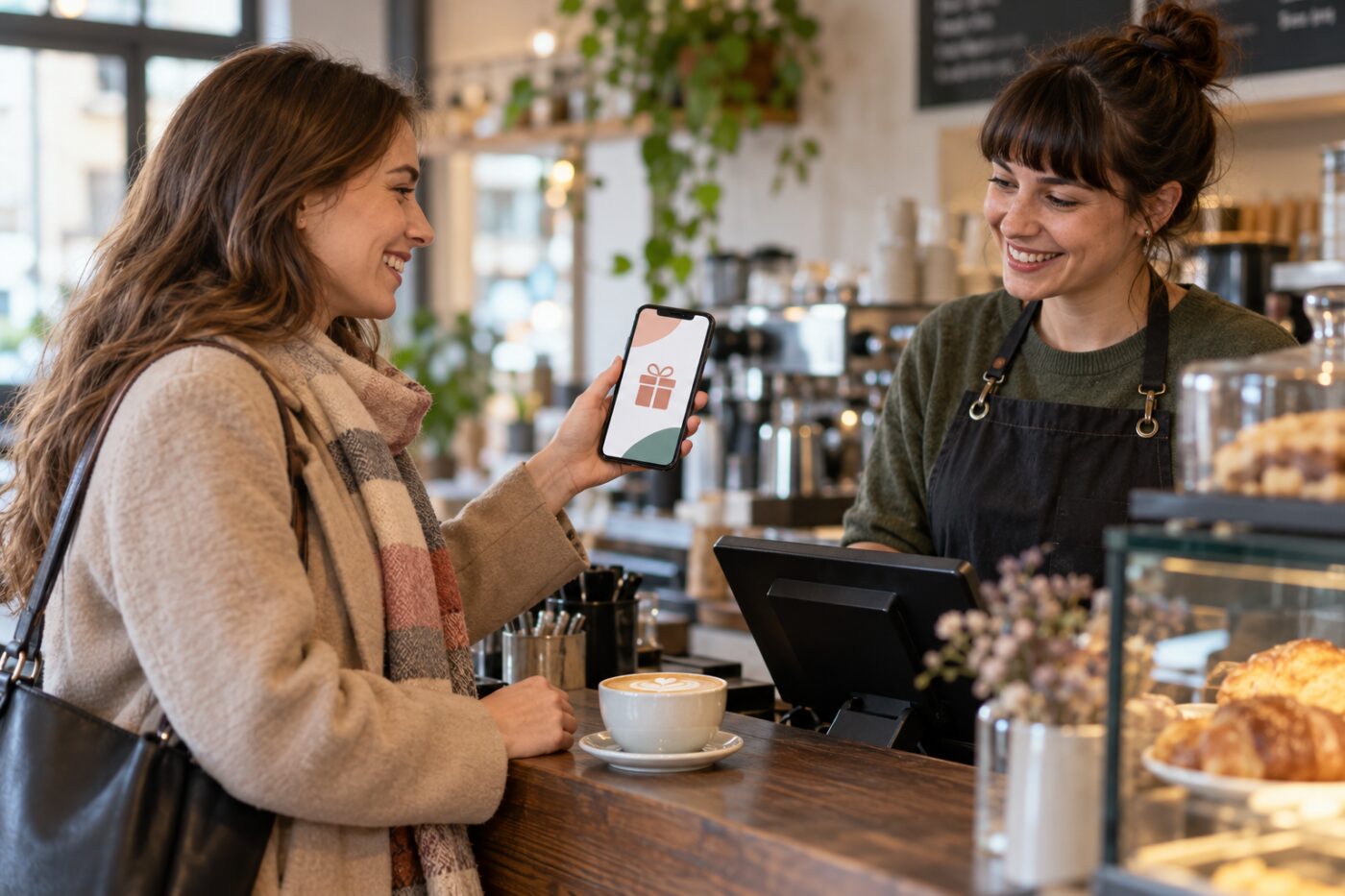
A simple example is easier to run than rules customers have to remember.
Contents
More articles
7 Loyalty Program Examples for Small Businesses
Home – Summary: Explore seven simple loyalty program examples for cafes, salons and local shops. Choose a reward and rules that give customers a clear reason to come back. A loyalty program does not need a complex app or several reward levels. For a small business, a…

How to Start a Restaurant Loyalty Program
Home – Summary: Plan a restaurant loyalty program with clear rules and a reward that fits your margins. Learn how to explain it at checkout and measure whether guests return. A returning guest already knows your menu and service. A loyalty program can give them…
Why Retaining Loyal Customers Is More Profitable Than Acquiring New Ones?
Home – Executive Summary: Customer retention is one of the most effective drivers of long-term business growth. Retaining existing customers costs significantly less than acquiring new ones while increasing customer lifetime value, profitability, and brand advocacy….